
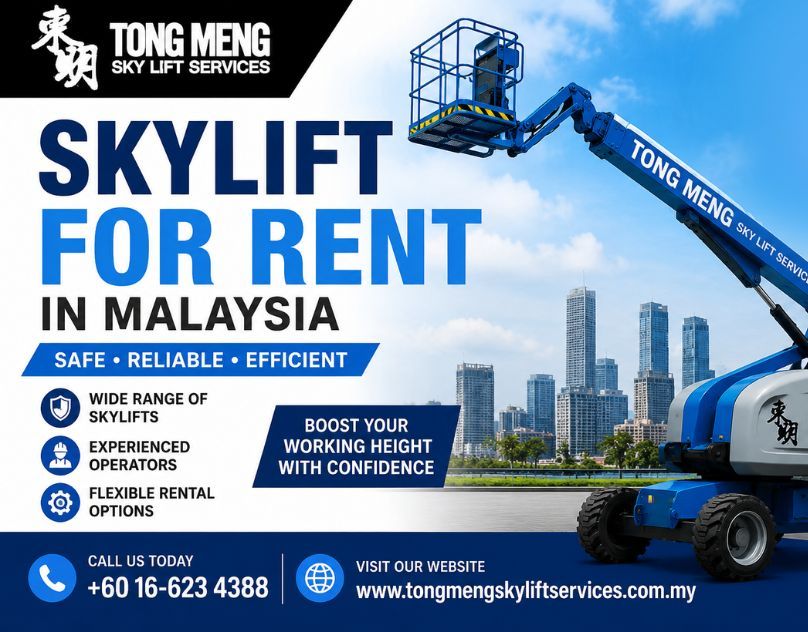
High-level work needs strong tools, smart planning, and safe work habits. Many repair crews and building teams search for lifting machines before they begin a project. Choosing the right skylift for rent helps workers climb high areas with better grip and safer movement. Tong Meng Skylift Services delivers equipment that matches many worksite needs across Malaysia. Still, every project brings different tasks and challenges. Therefore, workers should inspect machine features, test safety systems, and study ground conditions before they lock in the best machine for indoor or outdoor work.
Why Skylifts Matter for High-Level Work
Skylifts help workers reach tall places without risky climbing methods. Construction crews, repair teams, and warehouse workers use them every day. In many cases, these machines replace ladders and scaffolding.
Moreover, skylifts give workers a stronger balance and better movement. As a result, teams finish tasks with less strain and more control.
Common Jobs That Need Skylifts
- Building repairs
- Glass cleaning
- Tree trimming
- Electrical work
- Warehouse stock checks
- Outdoor sign fitting
- Roof checks
- Painting projects
Furthermore, shopping centres and factories rely on skylifts during routine repair work.
Benefits of Renting Instead of Buying
Many companies rent lifting machines because the project needs to shift from time to time. Buying heavy equipment may drain money and crowd storage space. Therefore, renting offers a smart and flexible choice.
Lower Starting Costs
Rental plans help businesses dodge huge spending. Instead of buying a machine, teams can rent one for short-term work.
Access to Better Equipment
Rental providers often refresh their machines. Because of this, renters can use newer models with stronger safety systems and smoother controls.
Fewer Repair Troubles
Machine repairs can freeze work schedules. However, rental companies often inspect and service equipment before delivery.
Key Things to Check Before Renting
Before you pick a lift, study both the machine and the work area. Although many choices exist, some features matter more than others.
Height and Reach
Always measure the work height first. A small lift may fail to touch the target area. On the other hand, a large lift may squeeze poorly into tight spaces.
In addition, think about side reach if workers need to stretch around walls or obstacles.
Ground Conditions
Check the ground before the machine arrives.
- Soft soil may sink under a heavy weight
- Uneven ground may shake the balance
- Indoor floors may need rubber tyres
- Wet surfaces may weaken grip
As a result, the right setup shields both workers and property.
Safety Features
Strong safety systems cut risk on busy worksites.
Look for:
- Emergency stop buttons
- Guard rails
- Stable platforms
- Clear control panels
- Alarm systems
- Harness points
Furthermore, trained operators steer lifts with better care and skill.
Understanding Load Capacity
Many renters focus only on height. Yet weight limits matter just as much. Every lift carries a set limit for workers, tools, and materials.
Why Load Limits Matter
Too much weight may tilt the machine and weaken control. Therefore, workers should check load limits before work starts.
Heavy tools, paint buckets, and repair equipment can pile up weight fast. Because of this, careful planning prevents delays and accidents.
Choosing the Right Type of Lift
Different projects call for different lifting machines. Therefore, you should learn about the main lift types before renting.
Scissor Lifts
Scissor lifts rise straight up and down. They suit indoor work with flat floors.
Best Uses for Scissor Lifts
- Ceiling repairs
- Warehouse tasks
- Indoor maintenance
- Lighting setup
- Shopping centre repairs
These lifts offer wide platforms, so workers can carry tools with ease.
Boom Lifts
Boom lifts stretch outward as well as upward. Because of this, they suit hard-to-reach places.
Jobs That Suit Boom Lifts
- Outdoor repairs
- Bridge work
- Tree care
- Stadium repairs
- Signboard fitting
Some worksites may also need a crane skylift for heavy lifting tasks and wider movement.
Indoor vs Outdoor Skylifts
Not all skylifts work well in every setting. Therefore, you should match the machine to the job site.
Indoor Equipment
Indoor lifts often include:
- Compact designs
- Quiet motors
- Non-marking tyres
- Smaller turning space
These features help protect floors and lower noise inside buildings.
Outdoor Equipment
Outdoor lifts need stronger support because rough ground creates extra challenges.
The machines often include:
- Heavy-duty tyres
- Strong wind support
- Higher ground clearance
- Longer reach capacity
As a result, outdoor equipment handles rough work areas with a stronger balance.
Signs of a Reliable Rental Service
A trusted crane skylift rental provider keeps machines clean, tested, and ready for work. Good service also shines through quick support and clear communication.
Look for These Positive Signs
- Clean equipment
- Safety checks before delivery
- Helpful staff
- Clear instructions
- Fast response times
- Proper documents
- Flexible rental periods
Although many providers offer similar machines, service quality often shapes the biggest difference.
How Weather Can Affect Skylift Use
The weather can change work site safety within minutes. Therefore, workers should check forecasts before outdoor jobs begin.
Rain and Wet Conditions
Rain can create slippery surfaces around the machine. In some cases, wet ground may weaken balance.
Strong Winds
High winds may push the platform and affect control when the lift rises. Because of this, operators should avoid dangerous weather during outdoor work.
Operator Training Matters
Even the best machine needs proper handling. Therefore, trained operators play a major role in safe skylift use.
Skills Every Operator Should Have
- Machine control knowledge
- Emergency response skills
- Hazard awareness
- Basic inspection ability
- Safe parking methods
Moreover, skilled operators lower damage risks and help projects move with fewer delays.
Planning Your Rental Period
A short rental may suit quick repair jobs. However, large projects may need equipment for weeks or even months.
Tips for Better Rental Planning
- Estimate project timelines early
- Add extra days for weather delays
- Schedule delivery before work begins
- Confirm pickup plans
Good planning helps teams avoid rushed extensions and work delays.
Why Regular Machine Checks Matter
Regular checks help workers spot small problems before they grow. Therefore, daily inspections protect both the machine and the team.
Areas Workers Should Check
- Tyres
- Control panels
- Safety rails
- Hydraulic systems
- Battery levels
- Fuel levels
These checks help machines run smoothly throughout the project.
Final Thoughts
The right lifting machine can drive a project towards better safety and smoother work. Workers need equipment that handles height, supports movement, and guards crews on busy sites. Picking the best skylift for rent also helps teams finish jobs with fewer delays and stronger control. Tong Meng Skylift Services supplies lifting solutions for many kinds of projects throughout Malaysia. Therefore, careful planning, skilled operators, and regular machine checks will help businesses tackle high-level work with greater safety, steady performance, and stronger results from the first day to the final task.
FAQs
Q 1: How do I pick the right lifting machine for my project?
Ans. First, measure the work height and inspect the ground carefully. Then, check the space around the site and count the weight of tools and materials. The right machine helps workers climb safely and finish tasks without trouble or delays.
Q 2: Why should workers inspect machines before work starts?
Ans. Safety checks help workers catch worn tyres, weak parts, or control problems before work begins. These checks cut accident risks and keep the machine running smoothly. Regular inspections also shield workers, tools, and nearby buildings from damage.
Q 3: Should workers use lifting machines during bad weather?
Ans. Workers should stop outdoor lifting work during heavy rain or strong winds. Wet ground and rough weather can shake balance and weaken control. Therefore, workers should study weather reports first to keep the job site safe and steady.